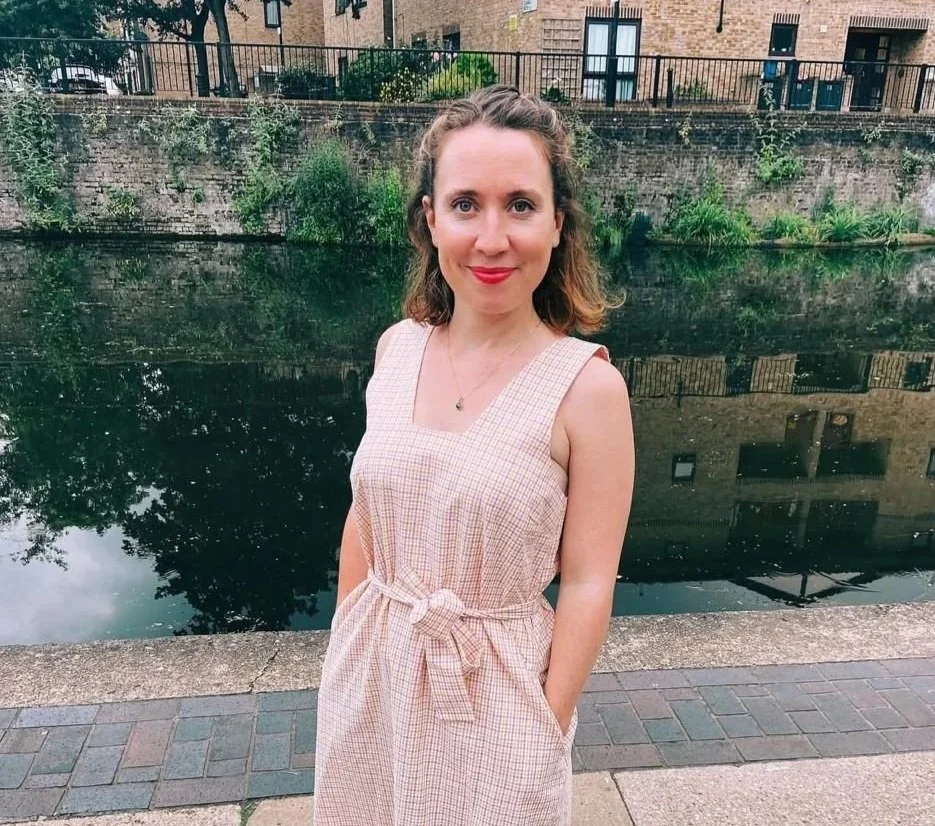
Flo is a Birmingham based nutritional therapist, Podcaster, mother & gut geek!
Before the festive fun of 2025, we caught up with Flo to hear about what she does, what motivates her and her upcoming nights at Lar.Da.
Tickets start at £45 and are running from February - April
Who is Flo?
I am a Naturopathic Nutritionist and have been in clinical practice for 10 years. I predominantly work with complex cases of autoimmunity, as well as gut-related conditions ranging from IBS, IBD, reflux and constipation. Working naturopathically means approaching each case differently; everyone is unique and will have different needs in order to get back to health. My work has a strong focus on quantum and circadian biology, understanding the role of the nervous system, and of course the gut and microbiome’s role in overall health.
I help clients understand which areas we will support, whether through dietary change, herbal interventions or ways of calming or shifting the nervous system. Some people just need encouragement and education, while others require longer term support and deeper change over time. Ultimately, I teach people how to connect with themselves, with their needs, and with the natural rhythms that take place in and around us. These connections are getting lost amid the overwhelming amount of online information, which is making people more confused and disconnected than ever.
Does this limit clients?
Yes. The goal is always that clients learn the tools they need to move forward independently and regain trust in themselves. With so many people turning straight to AI or external sources, it has become harder to trust our own bodies. We have forgotten how to look for answers within ourselves. People do not realise how simple some of this can be, and many have become disillusioned into thinking they need influencers or supplements in order to feel well. Yet we are in a global health crisis with rising metabolic, autoimmune and mental health conditions, alongside increasing allergies. Hours spent indoors, social media and dependence on processed interventions are clearly not the answer.
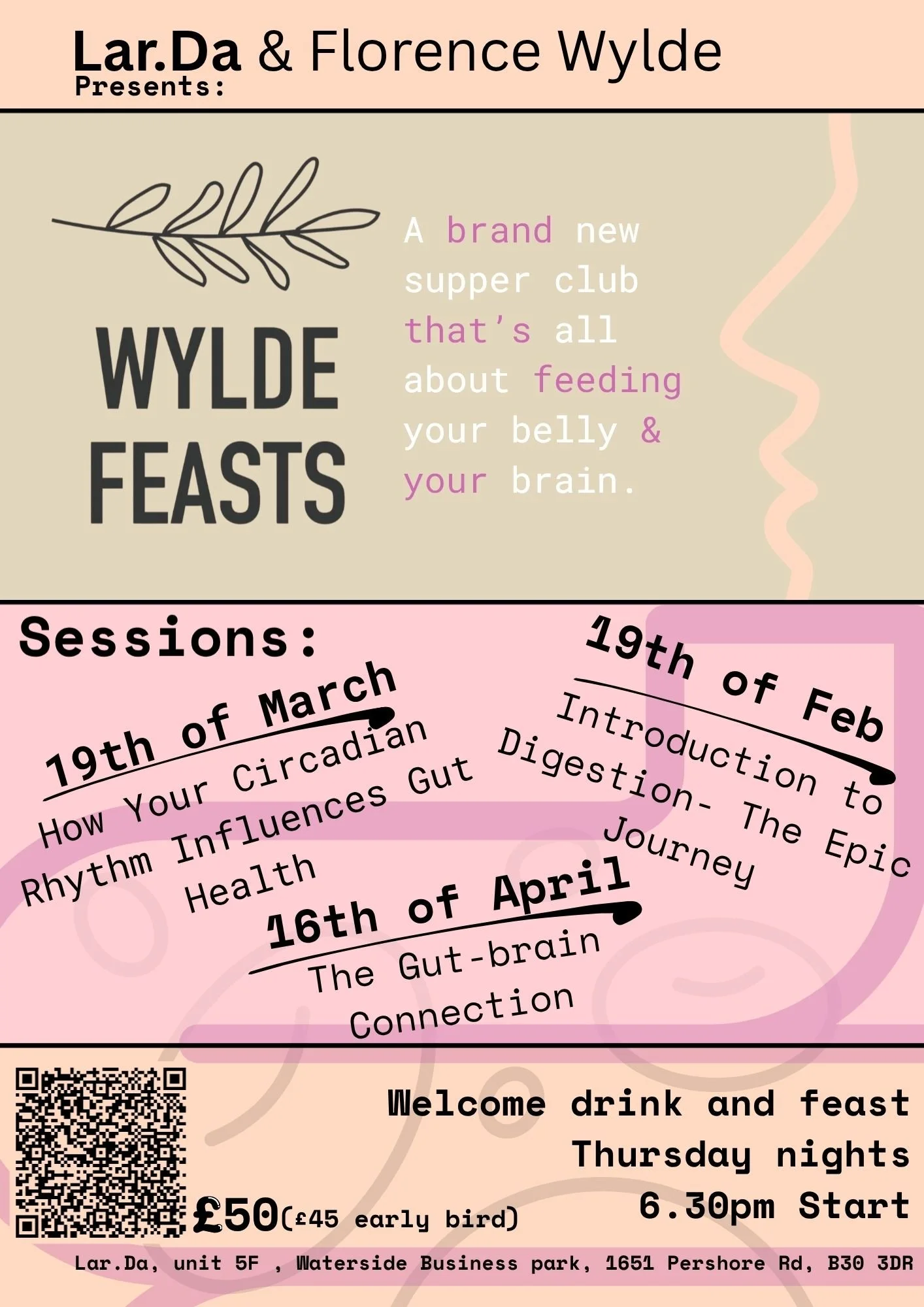
Come and join us for a feast for the brain and your gut.
What is Wylde Feasts?
It is a supper club for people to come and learn about health or nutrition, in this case gut health and the microbiome, in an informal, relaxed environment with like-minded, curious people. The food correlates with the topic, and I want people to feel connected for an evening, learn from me and from each other, and leave feeling empowered to make small (or big) changes with new ideas, recipes, tools or avenues to explore.
The bigger picture for me is that when we start to eat more consciously, and when our gut health is thriving, the microbes that live within us are thriving too. This influences everything around us; the microbes in our soil, on plants, in the trees and if we are physically healthier and happier this resonates into others. We have the power to shift these patterns, but it all starts from within.
Where did the inspiration come from?
I started the events eight years ago with my sister, who is a brilliant chef. We loved going to supper clubs and realised there was a gap in the market; no one was doing a gut-health educational supper club. At the time, the microbiome was less well known and people thought it was still a theory. They came and were amazed by the information. Now it is in the collective awareness, which is wonderful, but with that comes misinformation. This new series of Wylde Feasts will be about understanding the most recent information on gut health, and I hope to dispel a few myths along the way. (Hint: the keys to great gut health do not come in a bottle or a pot.)
You can create a lot in a night. Connecting with someone who has a similar issue is reassuring. I love helping people reach a light-bulb moment about themselves, which can completely change the course of their health. Sometimes the smallest thing makes the biggest difference.
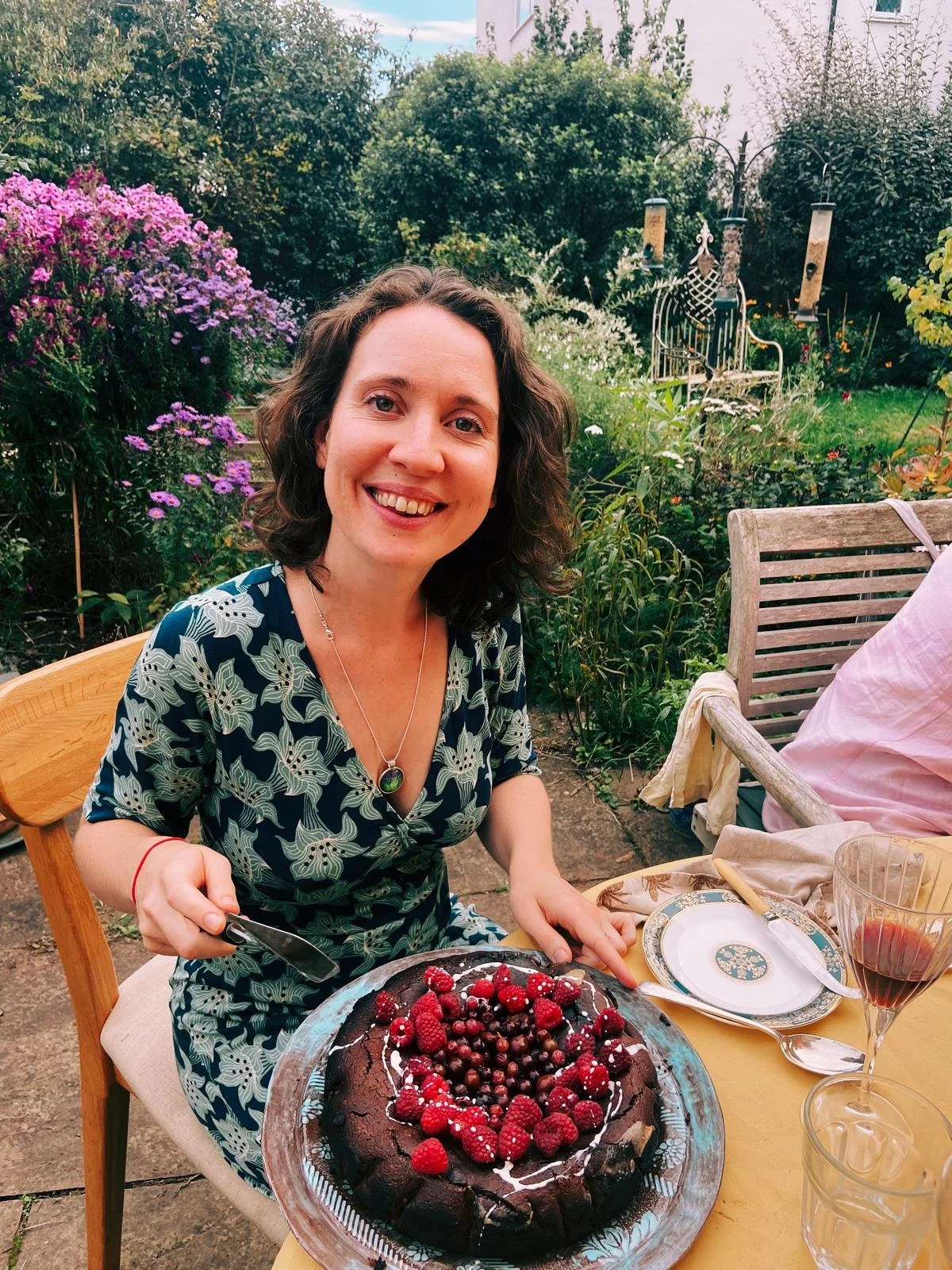
I want to make health information accessible to everyone, particularly the community that I live in. For many people it is too expensive to see a private practitioner, and the NHS does not offer preventative or personalised nutrition support. This subject is not complicated; it has just become confused and overwhelming online. I hope to put gut health and digestion into a simple, usable context so people can make changes that actually help.
Many people do not understand or appreciate the incredible journey that every bite of food goes on. Our digestive system is remarkable, and it works extremely hard. I help people understand this process so that we can figure out which part of their gut needs support. Your gut is working tirelessly to stay healthy and robust, but modern life can interfere with this. By educating people about how digestion actually works, they feel more empowered to make changes that allow the gut to thrive.
By understanding this journey of digestion, you can begin to see how your symptoms might relate to specific areas of your gut, which helps you understand where to focus your efforts. All too often people come to me with a long list of supplements, powders and strict diet plans that have not helped. When we strip it back, focus on the small things and get really specific, the biggest improvements tend to happen. And the outcome is usually that people are able to eat a more diverse diet than they have done for years.
What is the gut to brain connection?
There are many ways to answer this. They are connected. Not just the gut and the brain, but all of our organs communicate in a bidirectional way. Physiologically, the vagus nerve runs from the brain through many of our organs. It has incredible fibres that weave into each organ, acting like a motorway of information. If the brain is under stress, this signalling reaches the gut. And if the gut is inflamed or unsettled, that signalling affects mood, energy and cognition. When you support one, you often see a domino effect in the other.
What do you personally want to gain from these events?
To feel more connected to my local community. My clinic is based in Warwickshire and I am well-known there, but I do not yet have that in South Birmingham. I also love seeing people make changes over the time I know them. It is a great feeling to help others.
What topics come up the most?
A lot of people do not know what to eat to improve their gut. They often say, “I thought I was eating something safe, but now I am bloated. Why do my reactions to foods change so much?” Another common one is the difference between a shop-bought probiotic product and dietary change: “Can I just take a probiotic rather than changing my diet?” I also frequently have someone take me aside to ask, “Is this normal?” And more and more, people ask about specific products marketed as miracle solutions. If something sounds too good to be true, it almost certainly is.
Gluten and wheat come up a lot. I am looking forward to digging into this one with Carl; between us, we could do a whole evening on it.
And of course, probiotics always come up: do they work?
And do they?
Yes and no. It is a nuanced topic. I do not use them very much in my clinical practice because I tend to favour prebiotics and fermented foods, which I find more effective.
What is the difference between prebiotics and probiotics?
Prebiotics are a food or substance that feed our existing colony of microbes.
Probiotics are lab-produced bacteria designed to mimic human microbes. They come in many different strains and combinations, and the production processes vary widely. A common misconception is that taking a probiotic will re-seed your microbiome or increase diversity. This is not typically the case. Most probiotic bacteria pass through the gut, and while they can influence how your existing microbiome behaves, they do not usually take up long-term residence. Certain strains can be very effective for specific conditions when used short term, but taking them daily over a long period is unlikely to have a significant impact.
The term probiotic is also used to describe naturally fermented foods, but they behave differently. The effects of eating naturally fermented foods such as sauerkraut are not the same as taking a capsule, and we will get into this at the supper club.
Flo’s Podcast, Quantum Curious looks at quantum biology and circadian health.
Postbiotics are the metabolites produced after microbes consume prebiotics. Research in this area is growing quickly, and we are discovering that postbiotics, also known as short-chain fatty acids, interact with and influence our human cells. The presence or lack of certain postbiotics is associated with different health outcomes.